

Where a named way of working is held, and licensed by name.
You own your skill, always and forever. The repository is Even Steven's door on the Tacit Tessera register, where a named way of working is held under your name, and the store front where an owner finds one by the family of machine and licenses it by name for a job. You open your own record from the same place. Nobody is ranked, nothing is bought out, and every hour it works is counted on the record that shows who cleared the work.
Your entry sits in the Tacit Tessera register, at tacittessera.com, which writes a number beside your name so the entry can be found and counted, licenses it, and counts every use. Tacit Tessera keeps the register and the count, and deals with the makers, the kit companies and the fleet owners. The paper that lets the register use the corpus is not written yet. What that changes for you is nothing: your agreement is with Even Steven, it stays with Even Steven, and Tacit Tessera never asks you to sign anything.
A register and a store front, with one record behind both.
The repository is Even Steven's door on the Tacit Tessera register. A way of working that has been recorded, admitted, built and released is entered there under the name of the person it came from, for the family of machine it was taught on, with the sessions it was built from and the name of the person who signed its release. What is made of a person's skill belongs to Even Steven and to nobody else: the recording of the day, the paper it is turned into, and the tool a machine runs. The skill itself stays the person's, always and forever. Every one of those things carries their name, pays them every hour it is in use, comes out of service when they say, and passes to their family. We make the tool. The skill stays theirs.
Putting an entry in the register does not hand over the material it was made from. The sessions stay with us, held for the person they are about, and what the register holds is the entry, the number beside the name and the count.
The repository is also the store front. An owner tells us what they run, finds a way of working for that family of machine, and licenses it by name for a job. A person on their crew chooses it by name before the pass, and that choice is the clearance and the start of the count. The owner sees the hours. So does the person being paid, because the count comes from the record that shows who cleared the work.
And it is where the person whose way of working it is opens their own record: what was recorded, what was admitted and what was refused, what was built from it, where it is listed under their name, the hours it has worked and what they are owed.
An instrument that counts the hours and pays the person has to stand on its own, apart from whoever makes the machine that runs it. Its value is proportional to that independence. A register kept by the people selling the machines would be asked to keep every promise on this page against its own interest, and this one is not.
Why it is different, in fullOne row in the repository is a named way of working, for the family of machine it was taught on. It carries the name of the person it came from, and it runs only where a person on a crew has chosen it by name.
A way of working recorded from a person's hands sits on the Hands track, and that is what this page describes. The Tacit Tessera register carries two more: a Machine track, for a way of working taught to or loaded on a machine, and a Records track, for a professional's own practice or a company's own records. Even Steven owns what is made on every one of them, for the person or company it came from, and it is the one house a Source signs with on every one of them.
Even Steven has not recorded a capture session yet. The first sessions come from the family's own crews, on home ground, and the procedure that admits or refuses a record runs on us before it runs on anyone else. Nothing is listed until a named person on our side has signed its release, and nobody outside those crews has been asked to take part.
A name, a family of machine, the ground it was recorded on, and every hour it has worked.
A listing says whose it is, what machine, what work, what it is not for, what went into it, who signed it out, what it has done and where it stands. Nothing on it is a score.
- The name
- The person whose way of working it is, by nameNothing runs under a house name, and no number stands in for the name. The Tacit Tessera register writes a number beside it so the entry can be found and counted. If a machine is working their way, it says so.
- The number
- Ten characters, written beside the nameThe first eight are the part that persists: the sector, the track, the family, the sequence and the trade. The ninth is the edition. The tenth is the check. There is one public status word, Specified, and the number grades nothing. It is not the same thing as the ES number you are given when you come on: that one is our own marker for you and your file, and this one belongs to the entry in the Tacit Tessera register.
- The family of machine
- The family it was taught on, and no otherA way of working is licensed for the family of machine it was taught on. A machine outside that family sees no listing.
- The work and the ground
- What it was recorded doing, and whereThe ground, the material and the weather, noted as the crew found them on the day.
- What it is not for
- The work and the ground it was not recorded onSaid in the same words as what it was, so the owner reading it knows the ground it has worked and the ground it has not.
- The sessions under it
- Every session admitted under it, each signedEach with its own identifier and its own signature, so it counts itself. A refused session never reaches it.
- Who released it
- The named person who signed the releaseIf a release is ever wrong, there is a name on it, and the record of what went in answers the rest.
- The hours it has worked
- Counted in sessions, and shown to both sidesTaken from the record that shows who chose and who cleared. The person being paid and the owner paying read the same count.
- Where it stands
- In service, ended, or withdrawnA different choice, the job finishing, or notice given ends a count. Notice given takes the listing out of service, and it then carries both dates: the day it came out of service and the true date every copy is gone.
No score, no rating, no rank against the next name, and no opinion of the work. The checks a session goes through are about equipment and paperwork, and no check anywhere grades how a person worked. Whether the work was good is a thing the people who asked for that person already know.
One, as an example.
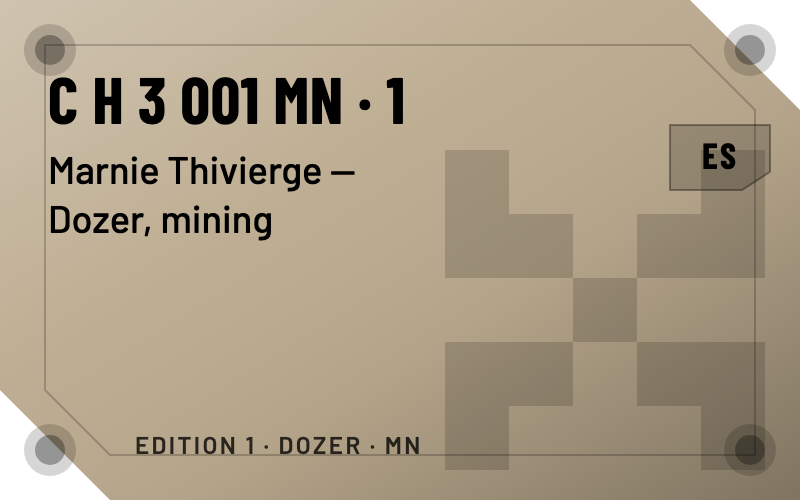
C H 3 001 MN · 1 is an EXAMPLE: a Hands entry collected by Even Steven, and the person named on it is invented. Nothing has been issued for real, so the number and the tile above are a specimen of the shape and not a listing.
The mark on a tile is the collector's: ES for Even Steven, for a hand it collected itself with the Trainer it adopts from Steady Eddie; ownership is said on the Card. The four houses, and the tile each one shows, are at tacittessera.com/houses.

What you see when you open it.
Four things, in this order, and nothing between them that you have to interpret.
The families you run.
You tell us what you run, and the page opens on those families. A family you do not run is not a heading you have to read past.
The names listed under each.
Inside a family the listings are names, in no order. Nothing sorts them, nobody pays to sit at the head of them, and there is no head.
What each was recorded doing, and what it is not for.
The work and the ground a name was recorded on, in the words a crew would use, and beside it the work and the ground it was not recorded on. You read both before you ask for anything.
The ceiling, on the covenant.
What an hour costs you at the most is written on the covenant, in one place, so you read it there and check there that it has not moved.
The covenantNothing is offered for a machine it was not taught on.
You tell us what you run. A listing shows for the family of machine it was taught on, and for no other.
A family is a kind of machine, not a model number.
A tracked excavator, a motor grader, an articulated rock truck: each is a family. Tell us the make, the model and the size of what you run, and we will say which family it is before you look at a name.
The owner says what they run.
The machine comes before any name. An owner tells us the family they run, and what comes back is every way of working taught on that family and nothing taught on another. What you run decides what you can see.
If the family does not match, no listing shows.
There is no near enough. A way of working taught on one family is not offered for a second family, however alike the two look from the ground. A machine outside the family sees no listing at all, and no page here pretends otherwise.
Then by name, and in no order.
Inside the family, the listings are names. They are not sorted by anything, because nobody here is picked from a ranking. Somebody who has seen the person work asks for them by name, and the repository is where that name is found.


A way of working for the family of machine you already run.
Tell us what you run, and what comes back is a name, or nothing.
The owner's door, the operator's door, and a door for the people who can say no.
Three kinds of reader come to the repository, and each has a page of their own.
Found by family, licensed by name.
You tell us what you run and a listing shows for that family of machine. A person on your crew chooses it by name before the pass, and the choice is the clearance and the bill. You see the hours, and so does the person being paid. It ends when your crew chooses something else or the person withdraws, and your next job goes back to your own operator's way or the basics the machine came with.
If you own the machinesYour own record, behind your own door.
What was recorded, session by session. What was admitted and what was refused, with the reason named. What was built from it, where it is listed under your name, the hours it has worked and what you are owed. You check the count against the record that shows who cleared the work, you can say no to a use, and you can withdraw. What is listed is a tool built from your record, under your name, and the skill it came from is still yours. It is your door and not your employer's.
Your own recordA safety officer's questions, and a union's second signature.
A safety officer asks whether anything here can move a machine or stop one. Nothing of ours is wired to the machine while a person works, a way of working proposes and never authorizes, and what reaches a machine is a release a named person signed. Where a works council or a union has a say in whether recording happens, its signature is taken as well as yours.
SafetyFive steps, and the third is the clearance and the bill.
The same five steps as the owner's page, because there is one way in and nothing loads itself.
Found by the family of machine.
You tell us what you run. A listing shows for that family and for no other, and inside it the names are in no order.
Picked by name, before the pass.
A person on your crew picks whose way of working runs, by name, and puts their own name on the choice. No default and no last-used.
The pick is the clearance and the bill.
That choice is the human authorization the machine may not move without, and it is the start of the count. The clearance and the invoice come from the same record, so neither can be quietly adjusted without the other.
Counted on the record that shows who cleared the work.
The hours are written from the choice, in sessions, on the record that already carries the name of the person who chose. You see them. So does the person being paid.
Ended by a choice, or by notice.
It ends when your crew chooses something else or the person withdraws, and when the job it was chosen for is done the next job begins with a fresh choice, or with none. The next job goes back to your own operator's way or the basics the machine came with.
Three kinds are offered through Tacit Tessera, each with a term, a field of use and a territory, and each carrying the same twelve actions a licensee may take and no others. An execution licence runs a way of working on a machine, which is the five steps above. A learning licence uses a record to build a model. A derivative licence builds a model and sells what comes of it. The fourth agreement on the covenant is what founds the two that build a model, and it is asked for on its own paper.
What an hour is worth to the person whose way of working it is, and the most it can cost the owner running it, are written on the covenant, and echoed in the same words only where the price is the subject of the page. One place to read them, and one place to check they have not moved.

Nothing runs until a person on the crew picks it by name.
The pick is the clearance and the start of the count, and both sides read the same record.
Every step has a name on it and a date on it.

From the seat to the listing, nothing is added quietly.
A session is signed as it closes. It is admitted or refused by a written procedure, with the reason named. A way of working is built from admitted sessions only, away from the machine, and a named person signs its release. Then, and not before, it is listed under the name of the person it came from.
When somebody later asks where a listing came from, the answer is a set of admitted sessions, each with its consent live at the time, a signature under the release, and a date on every step between the seat and the listing.
- 01RecordedIn the person's own seat, on their own machine, with the recorder wired to nothing and a photograph of that state inside the record. It starts when the person says so, and it is signed as it closes.
- 02AdmittedRun through the written procedure before anyone learns from it. Admitted, or refused with the reason named: a field missing, a consent that was not live, a set-up that cannot be shown. Refused is not a criticism of the person.
- 03BuiltA way of working is built from admitted sessions only, and away from the machine. This is the part people call AI, and here it learns from nothing the person did not say yes to, the result runs under their name, and it pays them every hour it runs. A refused session never reaches it, and no machine on a site learns while it works.
- 04Released by a named personWhat reaches a machine is a release, and a named person signs it. Their name stays on it for as long as it runs, and the record of what went into it is kept from the first day.
- 05Listed under the nameIt goes into the repository under the name of the person it came from, for the family of machine it was taught on, because that person said yes, on its own, to it being licensed under their name for somebody else's job.
- 06Chosen and countedA person on a crew chooses it by name before the pass and puts their own name on the choice. The count starts from that act, and both sides read it.
- 07Withdrawn on noticeThe person gives notice and nothing new starts under it from the day the notice arrives. The job already running finishes, because stopping a machine mid-pass is its own hazard. The owner is told first, so nobody is left short.
- 08Gone by a true dateEvery copy we hold is deleted, backups included, and the person is told the true date rather than the convenient one. Where the material went into a model under a learning or a derivative licence, it comes out at that model's next revision, the date is stated before the person agrees, and nobody here will tell you a model has forgotten you. The withdrawal itself stays on file, because a record that deletes its own withdrawals cannot show it honoured one.
No ranking, no score, no paid place, and nothing that runs without a person clearing it.
Each refusal below protects the reason a person would put their name in the repository at all. Take one away and the rest stop meaning anything.
- No ranking. Nobody is picked from a list sorted by anything. You are asked for by name, by people who have seen the work.
- No score. A session is admitted or refused on equipment and paperwork alone, and no check anywhere grades how a person worked.
- No leaderboard. We do not keep a list you can climb, and there is no list you can fall down.
- No rating. Nobody rates a way of working. No star, no rank and no score sits beside a name; the number written beside it names the entry and grades nothing.
- No paid placement. Nobody pays to be found first, because inside a family there is no first.
- No listing without the person's yes. A way of working goes into the repository because the person said yes, on its own, to it being licensed under their name, and it comes out when they say so.
- No way of working blended with another on the machine. One runs at a time, chosen by name at its own handover, and it is never mixed with the owner's own operator's way or the basics the machine came with.
- No recording sold as such. A session is information about an identifiable person. It goes nowhere without their yes, and whoever licenses a way of working cannot pass it to anybody else.
- No flat sale of the whole. The repository is not sold entire, and neither is what is in it. If this company changes hands, that should be a reason to withdraw, on its own, and the right to walk at that moment is one of the points the agreement is being built around.
- Nothing bought out. We never buy a person's technique. There is nothing there to acquire, and an instrument that took it outright would extinguish the reason to keep paying them.
- Nothing that runs without a person on the crew clearing it. Loaded is not cleared. A way of working proposes and never authorizes, and a person on the crew says go, on the day, every day.
On blind, wet or soft ground every measure you could rank by turns on you. The careful operator works slower, corrects more, and reads as the worse one right up until the quick one is in the water. A list sorted by any of that would put the wrong name at the top, and the repository is built so there is no top. A way of working does not have to be the best in the country to be listed. It has to be yours.
A record can show a day where nothing went wrong. A score cannot.

If a machine is working your way, it says so.
The name is the point, and it stays attached to you.
Your own operator teaching your own machine never enters the repository.
Two arrangements get confused, and only one of them is a listing.
Your own operator, your own machine.
Your best hand teaches it on your own machine, on your ground, and that way of working stays with you. Your operator, your machine, and it goes nowhere else. The skill is still theirs. It runs on your iron under their name, every hour it runs is counted and charged the same as any other, the half of every one of those hours is paid to them, and they can end it. We never buy the skill behind it and we do not sell it to your neighbour. It is not listed, it is not offered to anyone, and nobody outside your crew can find it.
A specialist's way of working, by name.
Licensed for your job, under their name, with that operator paid for every hour it runs and able to end it. For the jobs that need a way of working nobody on your crew has. Nobody is hired and nobody is sent to your site. This is what the repository holds, and the first kind never becomes it on its own.
A way of working you taught your employer's machine stays with that employer. It going anywhere else takes a fresh agreement, signed by you.
The covenant, the part that protects the person with the least room to say no
So a way of working moves from private to listed in one way only: on a fresh agreement, carrying the signature of the person it came from and their yes to it running under their name for somebody else's job. An owner cannot list it for them, and we cannot list it for them. If they never sign, it never moves, and nothing about the arrangement they already have changes.
Four readers, and what each one finds here.
Some houses in the family bring skill sets in. Even Steven owns what is made of them and holds the person's paper. Tacit Tessera is where the licences to machine makers are issued, and a record is used to train a model only where the person has said yes to that, on its own paper. The three are kept apart on purpose: the house that brings a skill set in never holds a person's paper, and the house that holds the paper never decides what a licensee may do.
Tell us what you run. A listing shows for that family of machine and for no other. Somebody on your crew picks it by name before the pass, and that pick is the clearance and the bill. You see the hours, the person being paid sees the same hours, and it stops when your crew chooses something else or the person withdraws.
Your listing carries your name, the family of machine it was taught on, the sessions admitted under it, who signed its release and every hour it has worked. It is there because you said yes to it, on its own, and it comes out when you give notice. You open your own record from the same place, and your employer does not. Your skill stays yours, and what it earns passes to your family for as long as the licence runs.
Nothing in the repository can move a machine or stop one. What reaches a machine is a release a named person signed, it proposes and never authorizes, and a person on the crew clears every job by name, on the day.
Registration records provenance. It does not establish that a skill set is safe, accurate or fit for any particular purpose. What is licensed is a way of working, for the family of machine it was taught on and the job it was licensed for, and it cannot be passed to anybody else. The person's right rests on privacy law and on the agreement rather than on a claim over technique. Nothing in the repository is sold outright, and neither is the register itself.
Tell us what you run, or which seat.
If you own the machines, say which family you run. If people ask for you by name, say which seat and which ground. There is nothing to sign.